I'm not a perfect environmentalist. I'm just a dad and a veteran trying to figure out how to feed my family without filling up a trash bag every single day.
A few years ago, I was taking out the garbage for what felt like the third time in two days. As I tied off another heavy, plastic-filled bag, I realized almost everything inside it came from our kitchen: plastic wrap, single-use snack bags, paper towels, and food packaging. As a father, a husband, and a Marine Corps veteran, I've always believed in self-reliance, discipline, and leaving things better than I found them. But looking at that trash pile, I realized my daily habits didn't line up with my values.
I decided to make a change. But when I started looking for "zero waste" advice online, I hit a wall. Everything felt either too expensive, too complicated, or designed for people who had hours of free time to hand-make their own dish soap. That wasn't going to work for my family in Jacksonville. We needed practical, no-nonsense solutions that actually worked in a busy household.
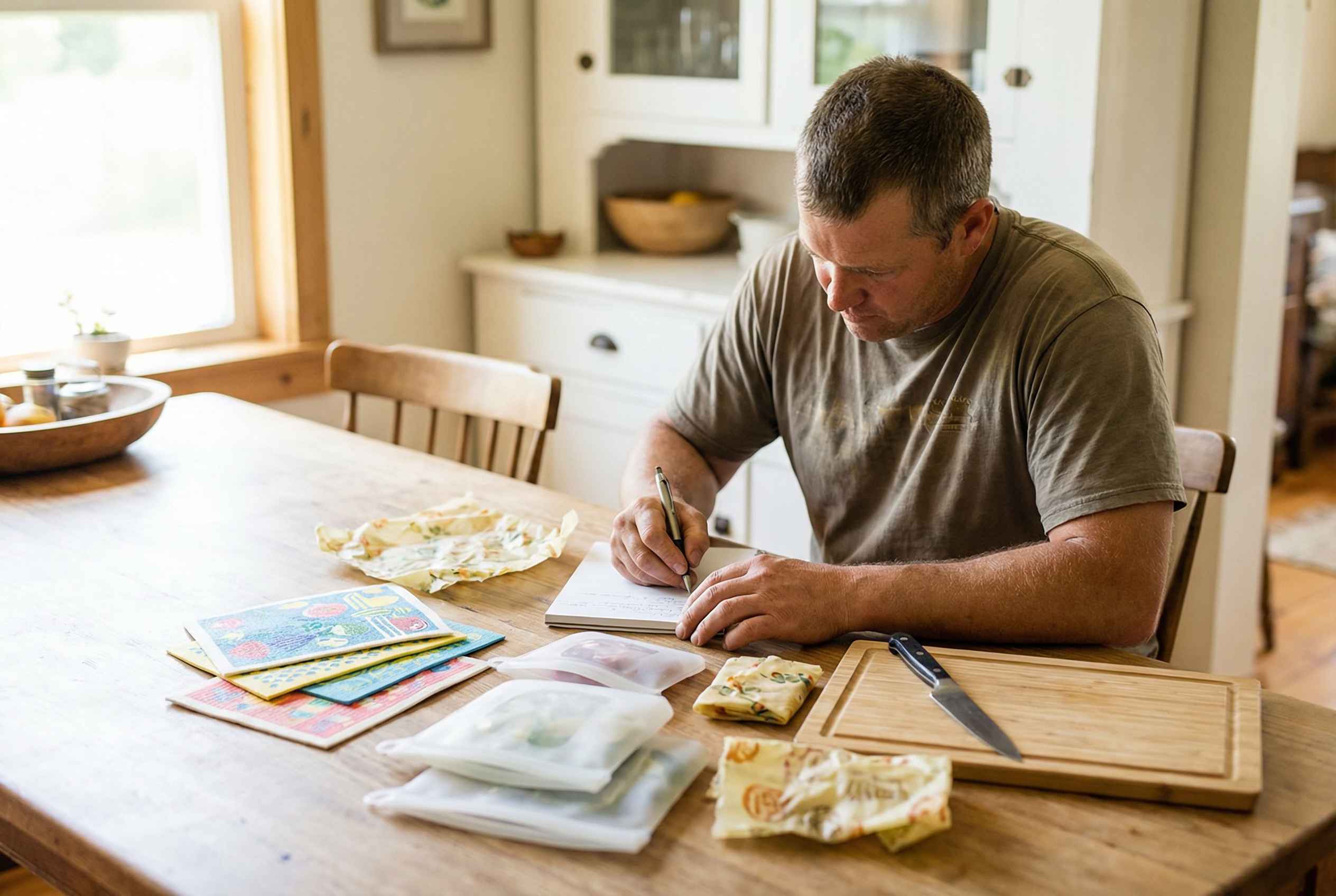
Testing and taking notes on a new batch of reusable kitchen products — a typical Tuesday.
So I started testing. I bought the bamboo brushes, the silicone bags, the compostable sponges. Some of them were incredible — swaps that saved us money and worked better than the plastic versions. Others were complete garbage that fell apart after a week. I kept notes on everything: durability, ease of use, whether my family would actually use them, and whether the cost made sense over time.
I built Zero Waste Kitchen to share the honest truth about what works and what doesn't. No corporate greenwashing. No guilt trips. Just straight talk, real-world testing, and practical ways to reduce waste, save money, and build a more sustainable home — one swap at a time.
These aren't hypotheticals. These are the real challenges I ran into, the solutions I tried, and the honest results I got in my own kitchen.
With kids in the house, we were burning through two rolls of paper towels a week. Spills, sticky hands, wiping down counters — it was a constant cycle of use and throw away. At $3–4 a roll, that adds up fast.
I tested five different brands of reusable "unpaper" towels and Swedish dishcloths. I needed something that absorbed like a sponge but washed like a towel and didn't fall apart after three weeks.
We switched entirely to Swedish dishcloths for counters and cotton unpaper towels for spills. It took about two weeks to break the habit of reaching for the paper roll. Now we buy maybe one pack of paper towels a year for extreme emergencies. We've saved hundreds of dollars and kept countless rolls out of the landfill.
I was sick of wrestling with plastic wrap that never stuck to the bowl, only to throw it away the next day. Plus, storing half an onion in a plastic bag felt ridiculous — both wasteful and ineffective.
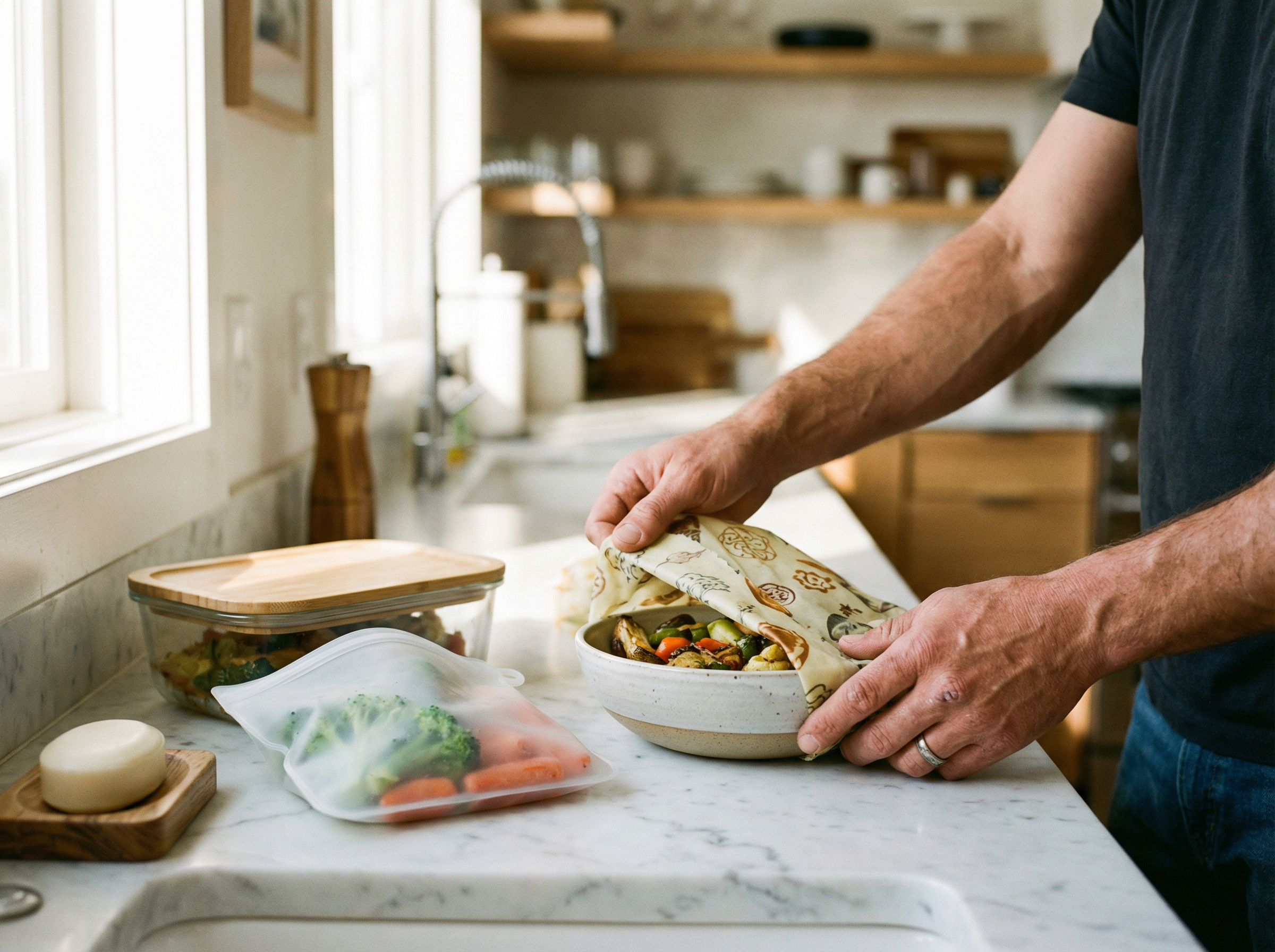
I invested in a set of high-quality reusable silicone bags and a pack of beeswax wraps. I tested both for a full month across different food types: cheese, produce, half-cut vegetables, and meal-prepped proteins.
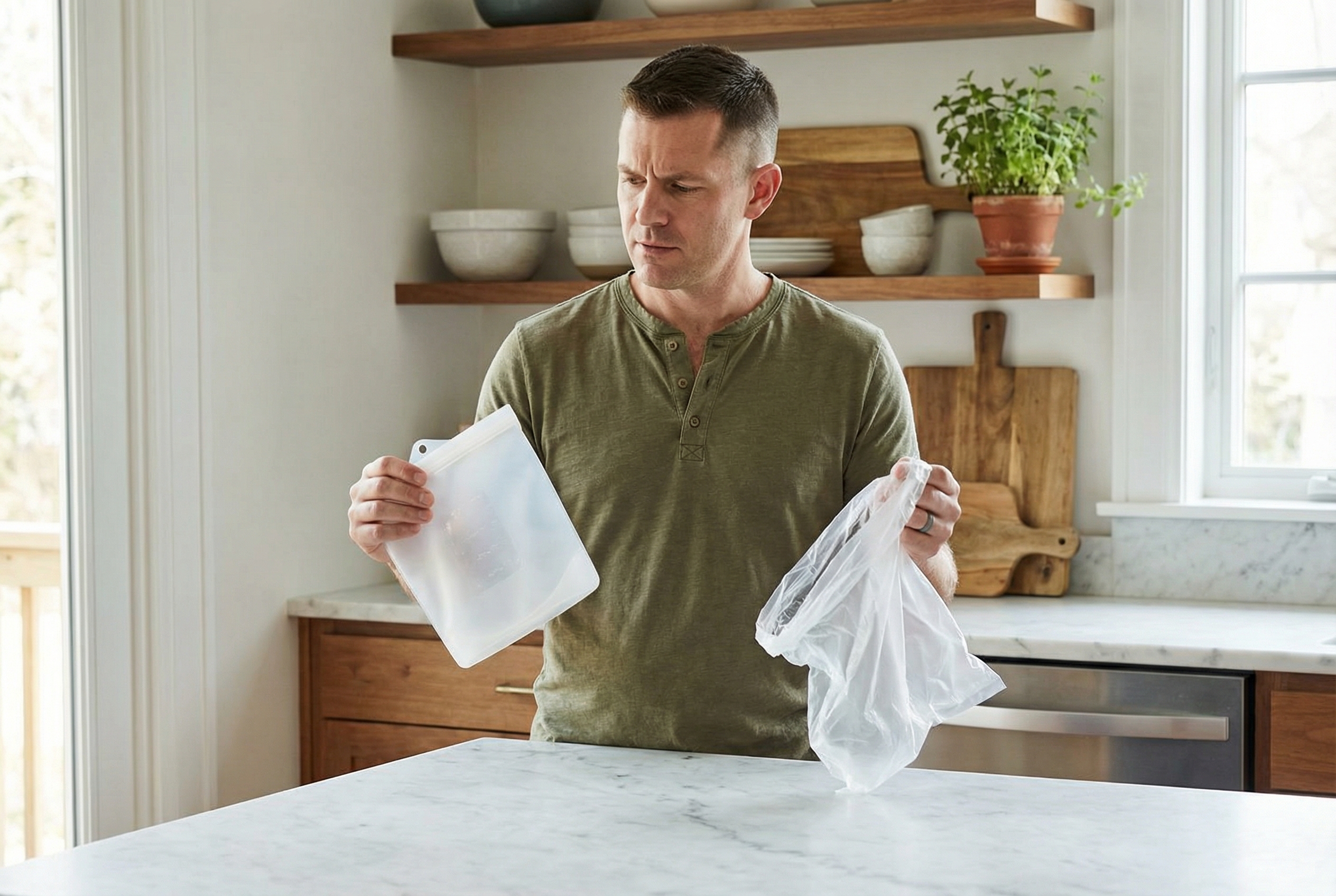
The silicone bags were a game-changer for freezer storage and meal prep — they seal completely and stand up on their own. The beeswax wraps took some getting used to (you mold them with the warmth of your hands), but they keep cheese and produce noticeably fresher than plastic ever did. We haven't bought plastic wrap in over two years.
Liquid dish soap comes in heavy plastic bottles that are rarely recycled properly. I wanted a plastic-free alternative that could still cut through bacon grease and dried-on food — not just light rinsing duty.
I tried solid dish soap bars. The first one I bought left a weird film on our glasses and barely lathered. I almost gave up and went back to the plastic bottle. I tried three more brands before finding one that worked.
I finally found a coconut-oil-based dish block that lathers up perfectly when used with a bamboo dish brush. It cuts through grease, leaves no residue, lasts three times as long as a liquid bottle, and leaves zero plastic behind. The key is pairing it with the right brush — the two work as a system.
After years of trial, error, and a few products that went straight in the trash, here's the framework I use to evaluate every product on this site.
The most sustainable product is the one you already own. Don't throw away perfectly good plastic containers just to buy matching glass ones. Use them until they break, then upgrade. Sustainability isn't about spending more — it's about wasting less.
Don't stress over a plastic bread tag. Focus on the items you use and throw away every single day: paper towels, sponges, plastic bags, and food storage. Nail those four categories and you'll eliminate 80% of your kitchen waste.
A cheap eco-friendly product that breaks in a month is worse than a plastic one that lasts a decade. I only recommend products that are genuinely built to last — because a product you replace every few weeks isn't zero waste, it's just greenwashing with extra steps.
You will still produce trash. You will still buy things in plastic packaging. That's okay. Zero waste is a direction, not an absolute destination. Every swap you make is a genuine win — and small, consistent changes compound into real impact over time.
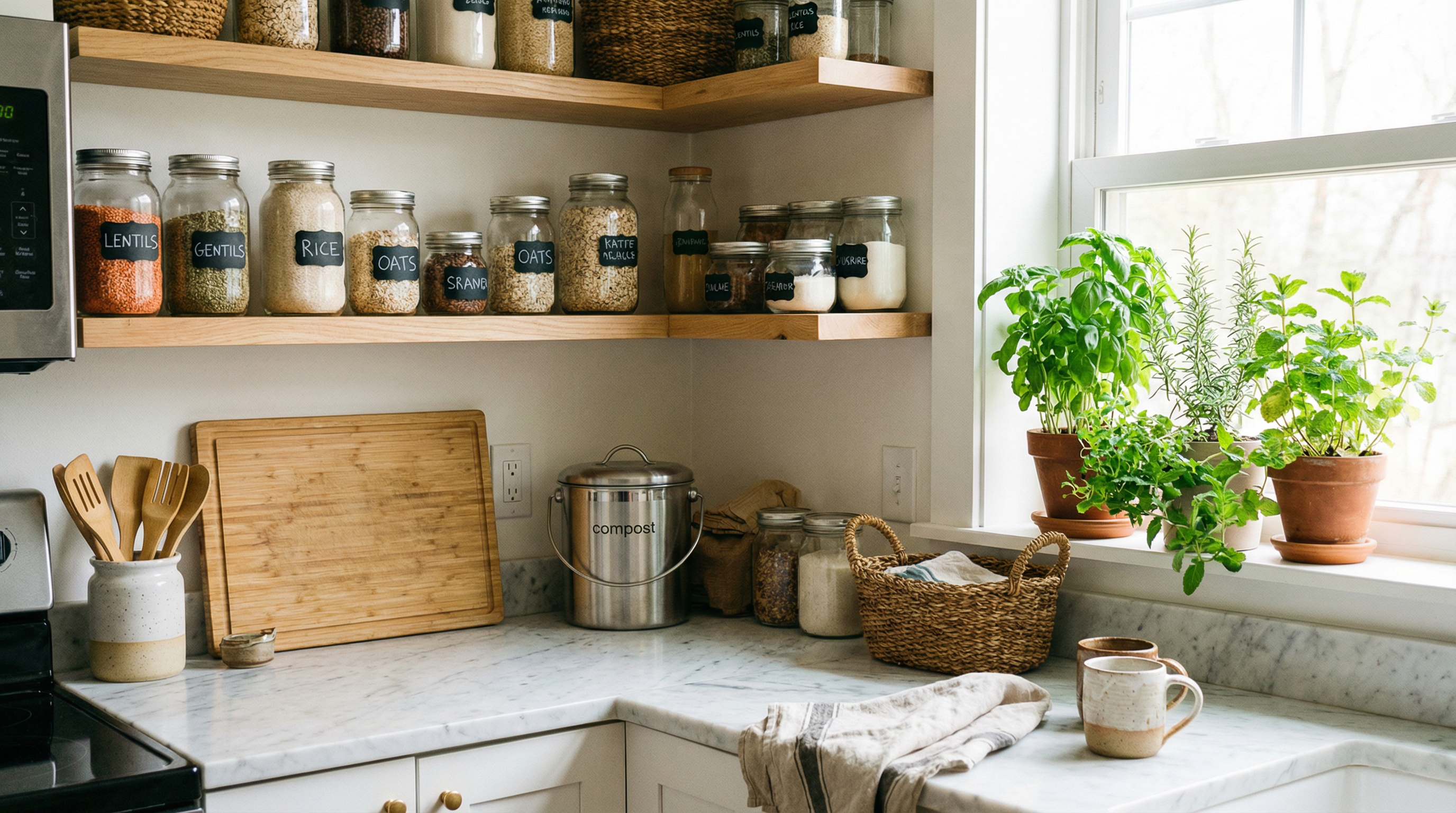
The goal isn't a perfect kitchen — it's an intentional one. This is what a real zero-waste kitchen looks like after a few years of gradual swaps.
Start with the products I've personally tested and use in my own kitchen every day. No fluff, no affiliate-first recommendations — just the honest picks that actually work.
As an Amazon Associate I earn from qualifying purchases. This supports Zero Waste Kitchen at no extra cost to you.